
Hiring a contractor can make your home renovation smoother, or create costly delays, disputes, and repairs. Before you sign, watch how the contractor communicates, documents the work, handles permits, and explains the price.
Common signs of a bad contractor include an unverified license or insurance, pressure to sign quickly, a large upfront deposit, a vague contract, cash-only payment demands, missing permits, and a bid far below comparable estimates. On-site behavior matters too: missed deadlines, poor communication, unexpected charges, and skipped inspections can signal deeper problems.
You’ll learn which contractor red flags to check before hiring, which contract and payment terms deserve scrutiny, how to recognize trouble during the project, and what steps to take when problems arise.
Check Out Our Helpful Bid Comparison summary page here
Red Flags to Spot Before You Sign
Before signing any remodeling contract or handing over a deposit, verify credentials and look for these 7 critical warning signs:
Demanding a large upfront deposit or cash-only payment: Reputable contractors never ask for 50% or more upfront; standard deposits rarely exceed 10% to 15% (and are legally capped at $1,000 or 10% in states like California).
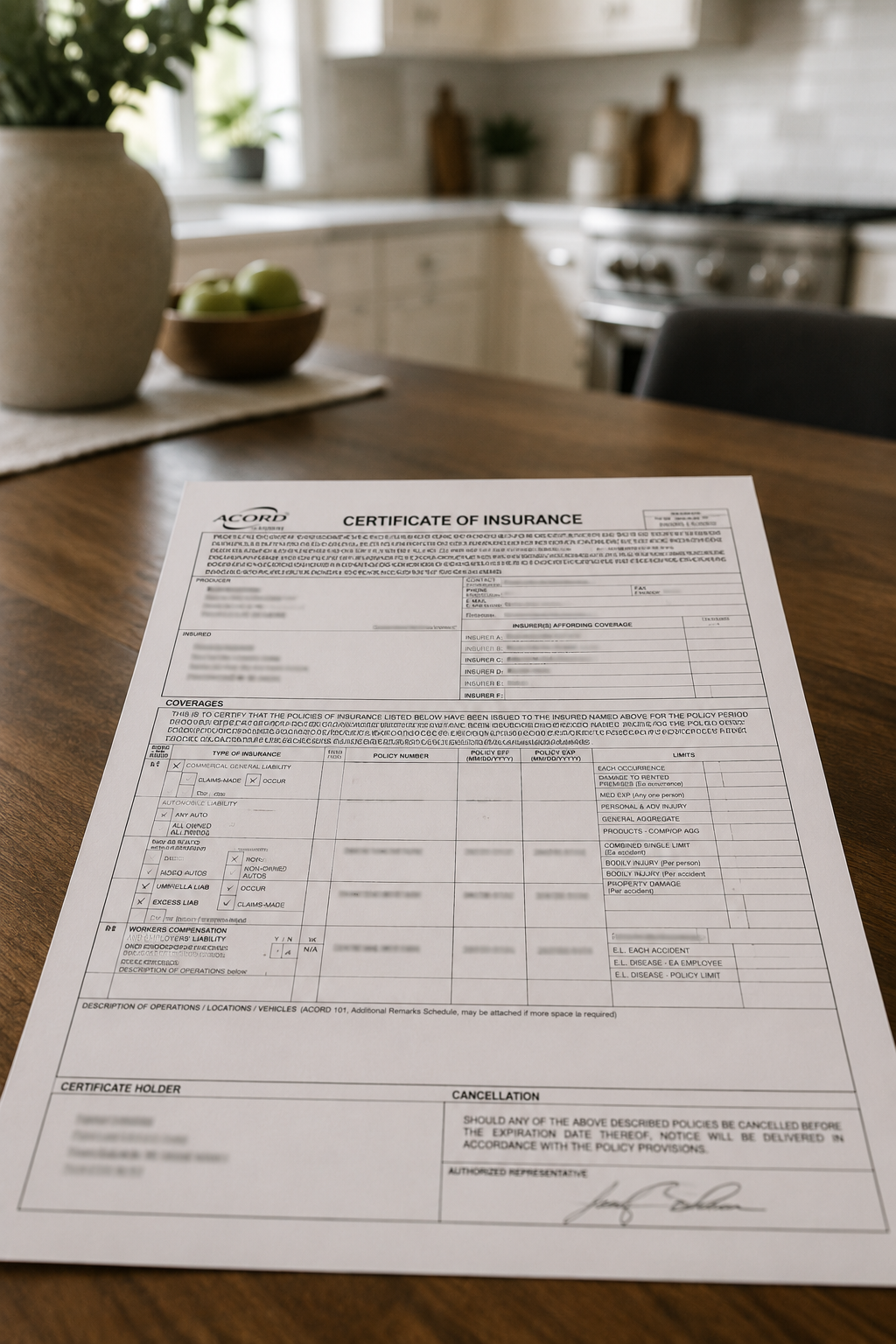
Refusing to provide proof of license or insurance: Working with an unlicensed or uninsured contractor exposes homeowners to direct liability for worker injuries and property damage.
Insisting that you pull the building permits: If a contractor asks the homeowner to pull owner-builder permits, they may be unlicensed, uninsured, or avoiding local building department scrutiny.
Submitting a bid significantly lower than competitors: A bid 20% to 40% below market usually signals missing scope, excluded allowances, or a planned barrage of costly change orders later.
Providing a vague, one-page estimate with no itemized specs: Detailed bids itemize specific fixtures, materials, allowances, and labor tasks rather than relying on vague "allowances" or verbal promises.
Using high-pressure sales tactics or "today-only" discounts: Professional trades quote projects based on labor rates and material estimates, not artificial sales deadlines.
Lack of verifiable local references or physical business address: Operating solely from a P.O. Box or burner cell phone with no track record of completed local jobs is a severe risk.
Check out our free bathroom remodeling workbook guide here
Contract and Payment Warning Signs
A reliable contractor should give you a specific scope of work, clear payment terms, and written documentation for decisions that affect cost or timing. Vague contracts, large upfront payments, cash-only requests, and undocumented changes can leave you with limited protection if a dispute arises.
Vague Scope, Missing Terms, and Weak Documentation

Your written contract should identify the work, materials, brands or quality levels, completion date, total price, payment schedule, permit responsibilities, and cleanup expectations. A vague scope of work, such as “remodel kitchen,” makes it difficult to determine whether cabinets, disposal, painting, inspections, or repairs fall within the agreed price.
Treat missing terms as a warning sign. Do not rely on verbal promises, text messages alone, or a contractor’s assurance that details will be “worked out later.” Ask for written contracts that explain warranties, delays, termination rights, and responsibility for damage. Keep estimates, invoices, plans, permits, receipts, and messages together as a paper trail.
Large Deposits, Cash-Only Requests, and Unsafe Payment Practices
As an industry standard, contractor deposits should range between 10% and 15% of the total contract value, and should never exceed 33% even for custom-ordered materials. Several states legally cap upfront deposits at 10% or $1,000 (whichever is lower). Any contractor demanding 50% down, full payment before work begins, or cash-only transactions without formal invoices should be eliminated immediately.
Change Orders and Payment Milestones That Protect the Project
Use project milestones to link payment to observable progress. For example, you might pay after demolition and rough-ins pass inspection, another installment after installation, and the final amount after completion, cleanup, and correction of documented defects. Keep a reasonable retainage until the contract requirements are satisfied, where local law permits.
Require a written change order before approving extra work. Each change order should state the added or reduced cost, revised materials, schedule impact, and any effect on warranties. Do not accept “we’ll settle the price later” arrangements. Compare invoices with the payment schedule, inspect milestone work, and document incomplete or defective items before releasing the next payment.
On-Project Behaviors That Signal Trouble
A contractor’s conduct during a construction project can reveal problems before they become expensive. Watch how they communicate, manage the schedule, follow legal and safety requirements, and control workmanship across every crew.
Poor Communication, Missed Deadlines, and Unclear Scheduling
Your general contractor should provide a written project timeline that identifies major stages, expected completion dates, material lead times, and any decisions you must make. Repeated missed deadlines, unexplained gaps in work, or constant changes to the schedule can indicate poor planning, insufficient staffing, or problems with subcontractors.
Pay attention to how the contractor handles questions and delays. A reliable contractor gives specific updates, explains the cause of a setback, and states how the team will adjust the schedule. Vague promises such as “we’ll be there soon” do not help you manage your home or budget.
You should also receive prompt notice about cost changes, material substitutions, and additional work. Keep records of messages, approvals, invoices, and schedule changes. If the contractor stops responding, avoids written answers, or blames others without proposing a solution, treat that pattern as a serious warning sign.
Permits, Inspections, Building Codes, and Safety Compliance
Unpermitted work can create legal, insurance, financing, and resale problems. Before work begins, ask which permits the project requires and confirm who will obtain them. You can often verify permit status through your local building department rather than relying only on the contractor’s statement.
The contractor should schedule required inspections and correct failed items before covering walls, floors, wiring, plumbing, or structural components. Refusing an inspection, pressuring you to skip one, or concealing work from an inspector can signal an attempt to avoid code requirements.
Safety practices also matter. Crews should use appropriate personal protective equipment (PPE), maintain clear walkways, secure ladders, control dust and debris, and protect occupants from exposed wiring or open structural areas. Ask for an explanation when work appears unsafe, and document conditions with dated photographs.
Shoddy Workmanship, Unmanaged Crews, and Subcontractor Issues
Look for defects that indicate weak quality control: uneven flooring, crooked trim, inconsistent grout lines, loose fixtures, visible gaps, water intrusion, cracked finishes, or paint applied over dirty surfaces. A contractor should inspect completed work, correct deficiencies, and avoid covering defective installations with later materials.
Your general contractor remains responsible for coordinating subcontractors, even when specialists perform the work. Crews should know the plans, protect finished areas, clean the site, and follow the agreed sequence. Frequent confusion, abandoned debris, damaged property, or workers who cannot explain their tasks may show inadequate supervision.
Ask who will perform specialized work and whether the contractor verifies licenses, insurance, and references when required. Do not approve a payment milestone while significant defects remain unresolved. List each issue in writing, include photographs when useful, and request a specific correction date.
Ready to estimate your project?
See what your bathroom remodel could cost based on your ZIP code and project scope.
Frequently Asked Questions
What is the biggest red flag when hiring a contractor?
The single biggest red flag is a contractor asking for a large upfront cash payment (such as 30% to 50%) before any work begins or materials are delivered. This often signals severe cash-flow problems, meaning your deposit is being used to finish another client’s stalled project rather than purchasing materials for your home.
What should you do if a contractor asks you to pull the permit?
Never agree to pull building permits for your contractor. When a contractor asks a homeowner to pull an "owner-builder" permit, it usually means they lack a valid trade license, do not carry required workers’ compensation insurance, or are barred by the local building authority. The permit holder assumes full legal and financial liability for code violations and on-site job injuries.
How much deposit should you give a contractor?
You should never pay more than 10% to 15% of the total project cost as an initial deposit, unless specialized custom materials (such as custom cabinetry or specialty stone slabs) must be ordered in advance. A safe contract ties all subsequent payments to tangible progress milestones and passed municipal inspections.
When should you fire a contractor?
You should consider terminating a contractor if they perform unpermitted or unsafe work, abandon the job site for extended periods without explanation, demand payment for unfinished milestones, or consistently fail required city building inspections. Always document issues in writing, photograph defects, review contract termination clauses, and consult a construction attorney before officially terminating.
How to Choose a Contractor and Respond to Problems
Verify qualifications before hiring, define payment terms in writing, and keep a complete paper trail throughout the project. Clear records help you compare reputable contractors, track milestones, and respond appropriately if a bad contractor misses deadlines or performs defective work.
A Practical Vetting Checklist Before Hiring
Verify state license and active insurance status: Check the contractor’s license number directly with your state licensing board and request an insurance certificate sent straight from their carrier showing both general liability and workers’ comp.
Call 3 recent references with similar project scopes: Ask past clients whether the crew stayed on schedule, kept the job site clean, communicated change orders in writing, and honored punch-list repairs.
Require itemized, normalized bids from at least 3 contractors: Compare line-by-line allowances for fixtures, tile, and plumbing valves so you are evaluating true apples-to-apples pricing.
Tie payments to verified inspection milestones: Establish a written draw schedule where payments are released only after specific milestones (demolition, rough plumbing/electrical sign-off, tile completion, final punch list) pass inspection.
Confirm who pulls the permits: Ensure the written agreement explicitly states that the contractor will pull all required municipal building, electrical, and plumbing permits under their own license.
Check Out Our Store For Spreadsheets To Help With Contractor Comparisons
What to Document When Work Goes Wrong
Create a dated record as soon as you notice a problem. Save the contract, estimates, invoices, receipts, permits, inspection reports, plans, change orders, and every message exchanged with the contractor.
Take clear photographs and videos that show defective work, unsafe conditions, unfinished areas, and property damage. Include wide shots for context and close-ups for detail. Record the date and location of each image, and keep the original files.
Send complaints in writing and describe the specific correction you require. Refer to the relevant contract term, set a reasonable response date, and avoid threats or personal accusations. After phone calls or site meetings, send a short email confirming what each person said and agreed to do.
Keep evidence of payments and missed milestones. If another professional assesses the work, request a written report that identifies the defect, likely cause, recommended repair, and estimated cost.
When to Pause Work, Withhold Payment, or Seek Dispute Resolution
Consider pausing work when the contractor creates a serious safety risk, performs work outside the agreed scope without approval, fails to meet essential milestones, or refuses to correct documented defects. Ask a qualified inspector or other licensed professional to assess urgent technical issues.
Do not withhold payment arbitrarily. Review your contract and local law first, because improper nonpayment can trigger interest charges, termination claims, or a mechanics lien against your property. Pay undisputed amounts according to the agreed schedule, and explain in writing why you dispute any remaining amount.
Use the contract’s dispute-resolution process, which may require negotiation, mediation, or arbitration. If the contractor abandons the project, misuses funds, threatens you, or causes substantial damage, consult a construction attorney and contact the appropriate licensing or consumer-protection agency. Keep the worksite secure and preserve all evidence before hiring a replacement contractor.