Renovating a basement bathroom can be more expensive than one in the upstairs for a variety of reasons. Below-grade spaces need careful attention to drainage, moisture control, and plumbing access—conditions that can make the work more involved than a bathroom remodel upstairs. The first step is understanding what is already in place and what needs to change.
This guide aims to covers all of the details of adding or renovating a bathroom in the basement.
How Much Does a Basement Bathroom Project Cost?
A basement bathroom project typically costs between $8,000 and $35,000 in 2026, depending on whether you are renovating an existing space or adding a brand-new bathroom. Renovating an existing basement bathroom with plumbing already in place averages $8,000 to $25,000, while adding a new bathroom that requires cutting concrete slab and running new drainage ranges from $15,000 to $35,000+.
Cosmetic refresh (existing plumbing): $6,000 – $12,000
Midrange renovation (existing plumbing): $12,000 – $22,000
New addition (existing rough-in stub): $10,000 – $20,000
New addition from scratch (slab cutting/pump): $18,000 – $38,000+
Renovating an existing basement bathroom costs less than building a new one, because the plumbing and drainage groundwork is already in place. A cosmetic-to-midrange renovation generally lands between $8,000 and $25,000, while adding a bathroom where none existed, complete with new drain lines, venting, and often a pump system to move waste up to the main sewer line, commonly runs $7,000 to $35,000 or higher once finishes and moisture control are factored in.
Renovating an Existing Bathroom vs. Adding a New One
A renovation replaces fixtures, tile, and finishes on top of plumbing that already works. A new bathroom addition requires running supply and drain lines, cutting into the slab or installing an above-floor pump system, and often adding new electrical circuits. That difference in underlying work is the single biggest reason cost estimates for "basement bathroom cost" swing so widely across sources.
Half Bath vs. Full Bath: How Scope Changes the Price
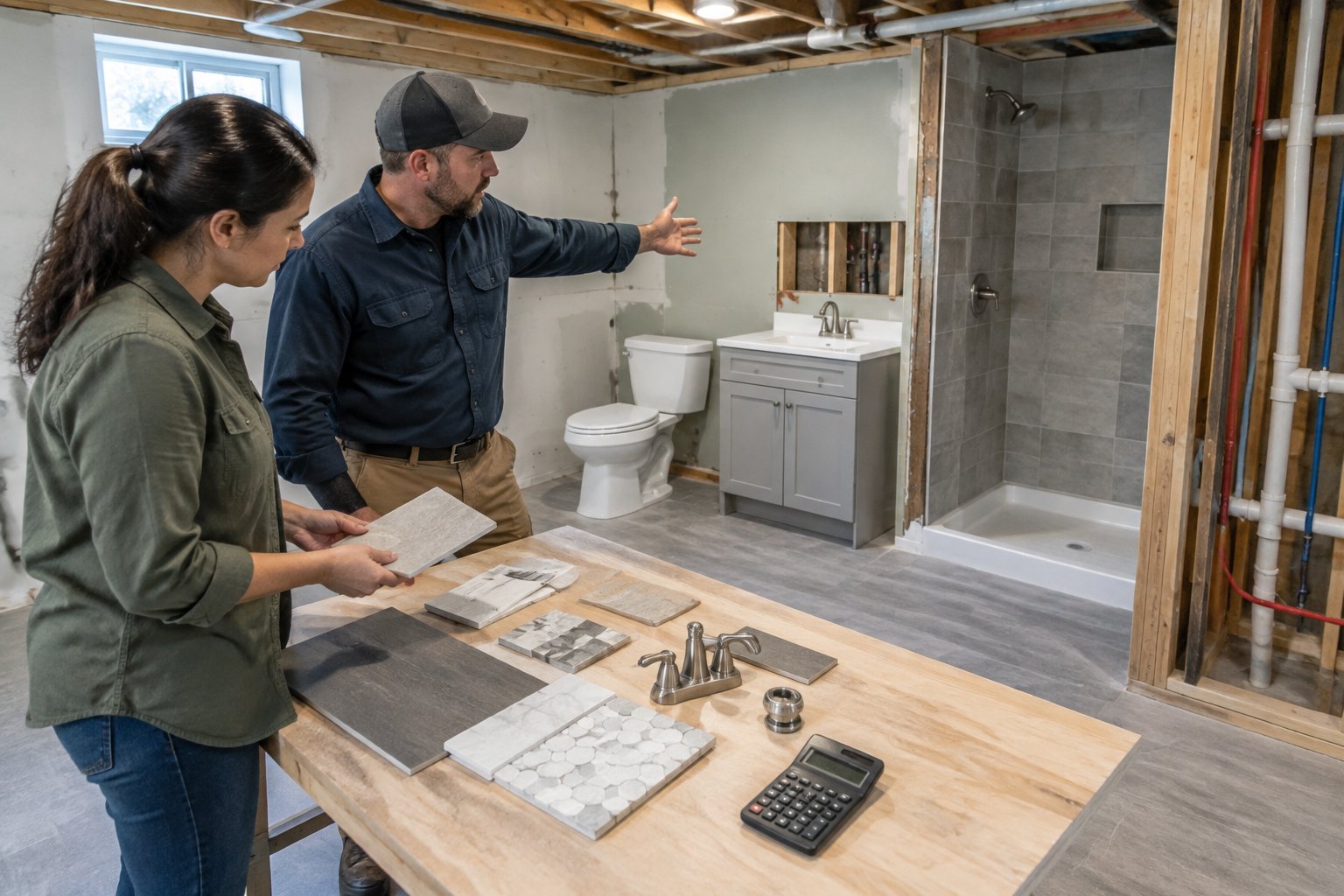
A half bath (toilet and sink only) costs meaningfully less than a full or three-quarter bath, since it skips the shower or tub, its waterproofing, and the added drain capacity a shower requires. Homeowners choosing a half bath for basement guests or a home office often land near the lower end of the range, while a full bath with a shower pushes toward the middle and upper end.
Related: See Our Tub to shower conversion guide here
What Does Cost per Square Foot Tell You?
Cost per square foot is a rough planning shortcut, not a precise quote. Reported figures for adding a bathroom to a basement run from about $200 to $250 per square foot for a 15 to 50 square foot space, and other guides cite figures near $350 per square foot for small 40 to 60 square foot bathrooms with premium finishes. Fixed costs like a pump system or a new electrical subpanel don't scale down proportionally in a very small bathroom, which is why per-square-foot math tends to understate small-bathroom costs and overstate large ones.
How an Existing Plumbing Rough-In Affects the Budget
An existing rough-in (a drain and vent stub already in place from original construction) can cut thousands off the project, since the most expensive below-grade work is already done. Rough-in costs alone, when they must be added from scratch, typically run $2,000 to $7,000, with a national average closer to $4,000 to $5,500. Confirming whether a rough-in exists, and whether it's usable, is one of the first things worth verifying before pricing anything else.
What Goes Into the Contractor's Price?
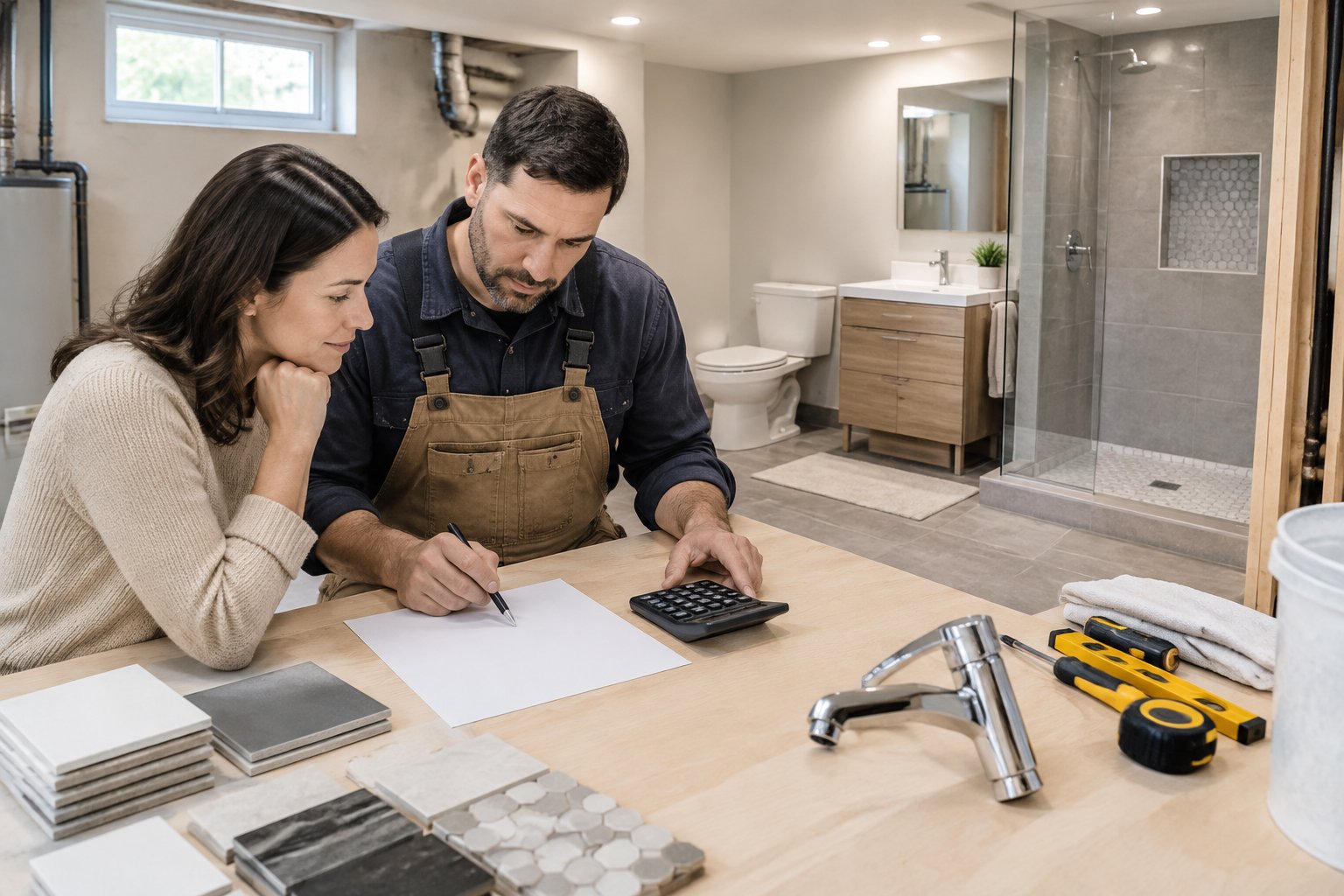
A basement bathroom bid is built from plumbing, fixtures, electrical, ventilation, labor, and permit fees, and each category behaves differently below grade than it does upstairs. Reading a bid category by category, rather than as one bottom-line number, is the clearest way to see where the money actually goes.
Drainage, Supply Lines, and Sewage Ejector Systems
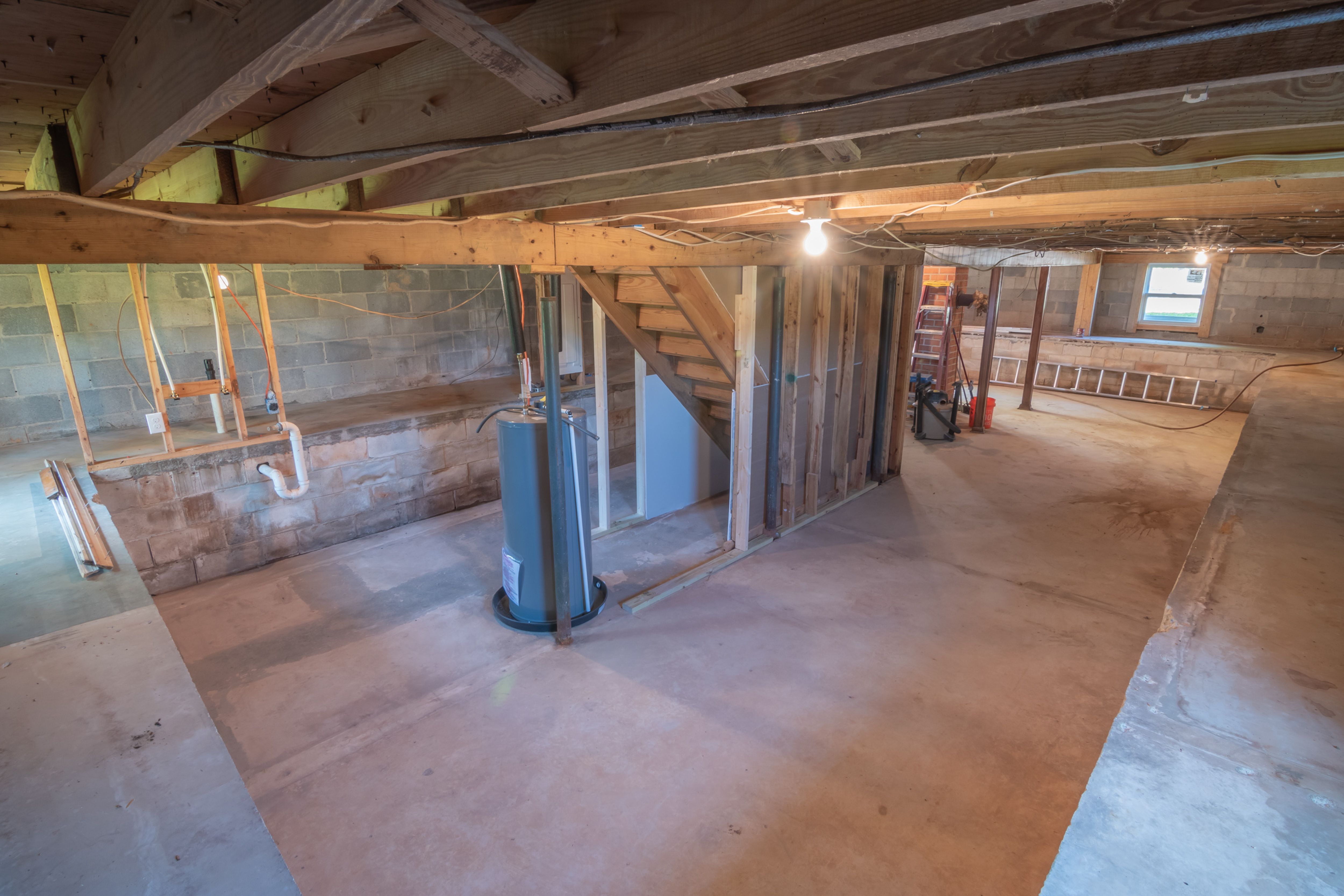
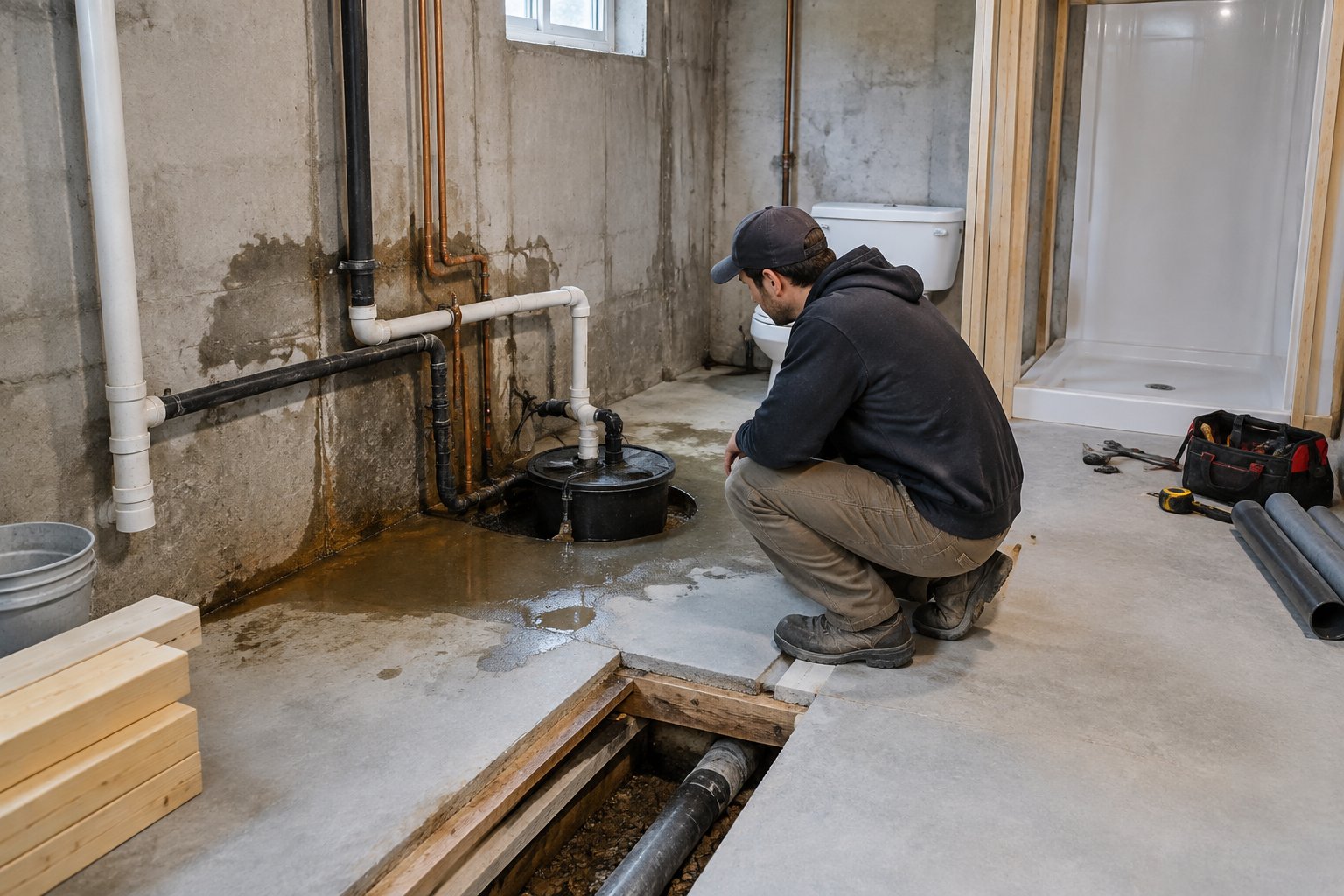
If the basement floor sits below the level where waste can drain by gravity to the main sewer line, the project needs a system to pump it up, commonly a sewage ejector pump or an above-floor macerating unit. This is frequently cited as the single most expensive basement-specific line item, since it involves cutting concrete, installing a basin, and tying into venting. Confirm this line item is priced separately in any bid rather than folded into a general "plumbing" allowance.
Shower Installation Cost, Toilet, Vanity, and Finish Choices
Fixture and finish selections shift the budget the same way they do in any bathroom, with shower installation cost varying by whether the shower is a prefabricated kit, a tiled pan, or a full custom enclosure. A basic toilet, standard vanity, and fiberglass shower surround sit at the low end; a curbless tiled shower, semi-custom vanity, and stone-look countertop push toward the high end. Waterproofing detail around the shower matters more in a basement than above grade, since any leak has nowhere to drain except into the slab.
Ready to estimate your project?
See what your bathroom remodel could cost based on your ZIP code and project scope.
Electrical, Ventilation, Labor, and Permits
New bathrooms typically need a dedicated GFCI circuit, an exhaust fan vented to the exterior, and permit sign-off from the local building department. Labor for basement work often runs slightly higher than main-floor work because of ceiling height constraints, and permit fees vary by city, so it's worth getting a specific number from the contractor rather than assuming a flat percentage.
Which Below-Grade Conditions Can Raise the Cost?
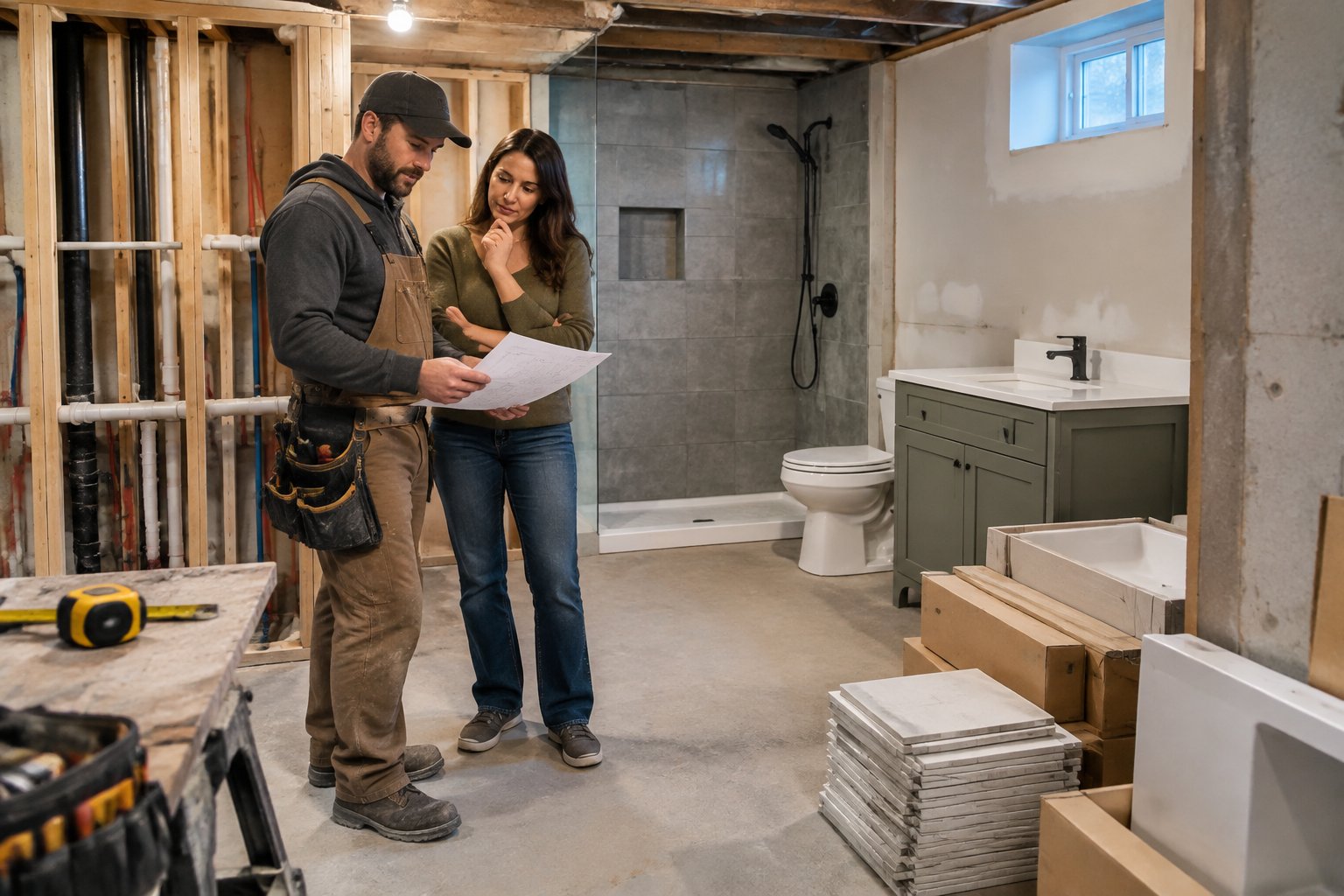
Basement bathrooms cost more than main-floor bathrooms mainly because of what's happening below and around the slab, not because the fixtures themselves are pricier. Moisture, plumbing depth, and ceiling height are the three conditions most likely to move a project from the low end of its range to the high end.
Water Intrusion, Waterproofing, and Mold
Any sign of past water intrusion needs to be addressed before finish work begins, since covering damp concrete with drywall and flooring invites mold growth later. Basement waterproofing cost varies by method: interior drainage and sump systems cost less than exterior excavation and membrane waterproofing, and mold remediation, if needed, is a separate line item that should be priced and resolved before bathroom construction starts. Moisture control isn't optional insulation against a hypothetical problem; it's the foundation the rest of the bathroom sits on.
Concrete Cutting, Sewer Height, and Plumbing Access
Where the main sewer line sits relative to the basement floor determines whether standard gravity drainage works or a pump system is required. Cutting the slab to run new drain lines adds labor and disposal costs, and the depth of that cut depends on the specific plumbing layout of the house, something a contractor needs to inspect directly rather than estimate from a floor plan alone.
Ceiling Height, Ventilation, and Local Code Requirements
Low ceiling height can limit fixture placement and ductwork routing, and some jurisdictions apply minimum ceiling height rules under the International Residential Code (IRC) for habitable basement spaces. Code requirements for egress, ventilation, and ceiling clearance vary by city and county, so confirm the specific requirement with the local building department rather than assuming a blanket national rule applies.
How Can You Build a Budget and Compare Bids?
A basement bathroom budget holds together best when the bathroom price is separated from the cost of finishing the rest of the basement around it. Basement remodel cost for a full finish (flooring, drywall, framing, lighting) commonly runs $15 to $65 per square foot depending on finish level, and that figure is easy to confuse with bathroom-specific pricing if a bid lumps everything together.
Separate the Bathroom Price From the Larger Basement Project
Basement finishing cost and basement bathroom cost are often bundled into one number in casual estimates, which makes it hard to tell what's driving the total. Ask for the bathroom line items (plumbing, fixtures, waterproofing, electrical) broken out from general basement renovation costs like flooring, framing, and drywall for the rest of the square footage.
Plan Low, Expected, and High Costs With a Separate Contingency
A single number invites disappointment when real conditions differ from assumptions. Advistra structures its bathroom estimates around low, expected, and high scenarios rather than one fixed figure, and recommends holding a separate contingency, generally 10% to 20% of the expected total, as money kept in reserve rather than folded into the contract price. Basement projects carry more contingency risk than upstairs remodels because concealed conditions (old plumbing, unexpected moisture, foundation quirks) surface more often once walls and flooring come up.
Check Bid Scope, Allowances, Exclusions, and Change-Order Terms
To accurately compare basement bathroom contractor quotes and avoid unexpected change orders, verify these five below-grade items before accepting a bid:
Confirm drainage method: Ensure the bid explicitly states whether waste will drain via gravity or require a sewage ejector pump / upflush system.
Check concrete trenching and patching: Verify whether cutting the concrete slab, soil excavation, backfilling, and slab re-pouring are included in the price or billed as extra labor.
Inspect the waterproofing scope: Confirm the specific moisture barrier and vapor retarder specified behind shower walls and underneath the subfloor.
Check electrical and ventilation venting: Ensure the quote includes dedicated GFCI circuits, a code-compliant vent fan ducted to the exterior (not into the joist cavity), and permit fees.
Normalize line-item allowances: Check that vanity, fixture, and tile allowances are specified in exact dollar amounts rather than vague "builder-grade" placeholders.
Choose a Scope You Can Price With Confidence
Basement bathroom costs vary as much as they do because the scope varies: a renovation of an existing bathroom with working plumbing sits far below a new addition that requires a pump system, slab cutting, and moisture remediation. Confirming which of those conditions apply to a specific basement, before comparing bids, is what turns a wide national range into a usable planning number.
Advistra's bathroom calculator builds a low, expected, and high range around bathroom-specific scope details in about four minutes, and it's free to start with no account required. It doesn't price basement-only conditions like sewage ejector systems or foundation waterproofing directly, since those need a contractor's on-site assessment, but it gives a starting range to compare bids against and flags what to confirm separately. Review the assumptions behind any estimate at www.myadvistra.com/methodology before using it to evaluate a bid.
Frequently Asked Questions
How much does it cost to renovate an existing basement bathroom?
Renovating an existing basement bathroom, where plumbing already works, generally costs $8,000 to $25,000 for a midrange update, with basic refreshes starting lower and high-end finishes reaching $40,000. The plumbing and drainage work already being in place is what keeps this figure below the cost of a new addition.
How much does a basement bathroom cost per square foot?
Adding a bathroom to a basement runs roughly $200 to $250 per square foot for a 15 to 50 square foot space, though small bathrooms under 60 square feet with premium finishes can approach $350 per square foot. Per-square-foot figures understate costs in very small bathrooms because fixed items like pump systems don't shrink proportionally.
What does it cost to install a basement bathroom with a plumbing rough-in?
Adding a rough-in (new drain and vent lines) from scratch typically costs $2,000 to $7,000, averaging around $4,000 to $5,500. Combined with fixtures, electrical, and finishes, a full addition with a new rough-in commonly totals $7,000 to $35,000 or more.
What is the cheapest practical way to put a bathroom in a basement?
The cheapest way to add a basement bathroom is to minimize below-grade plumbing alterations and choose prefabricated fixtures:
Use an existing rough-in: If your basement slab has capped pipe stubs from construction, build directly over them to save $2,000 to $5,000 in concrete cutting.
Install an upflush (macerating) toilet: Above-floor plumbing systems (such as Saniflo) pump waste to existing stacks without trenching concrete.
Build a half-bath (powder room): Eliminating the shower avoids extensive waterproofing, tile labor, and secondary drain venting.
Choose a prefabricated shower surround: A fiberglass or acrylic shower unit costs 40% to 60% less than a custom waterproofed tile shower.
See our article on investing in a bathroom in the basement here
Can you renovate a basement bathroom for $5,000 or $10,000?
Yes, you can renovate a basement bathroom for $5,000 to $10,000, but only as a cosmetic refresh that keeps the existing plumbing, layout, and shower enclosure in place. A $5,000 to $10,000 budget typically includes:
Replacing the vanity, faucet, and modern water-efficient toilet
Updating lighting fixtures, mirrors, and exhaust fan trim
Installing luxury vinyl plank (LVP) flooring with built-in vapor protection
Repainting with moisture- and mildew-resistant paint
Resurfacing or refinishing an existing fiberglass tub/shower surround rather than replacing it
Note: If the project requires cutting concrete, installing a sewage pump, or moving plumbing rough-ins, the budget will exceed $10,000.
How much does it cost to finish a 1,000-square-foot basement with a bathroom?
Finishing a 1,000-square-foot basement generally costs $15,000 to $65,000 depending on finish level, with a bathroom addition adding $12,500 to $40,000 or more on top of that base figure. Separating the bathroom line items from the general basement finishing scope in any bid makes it easier to see how much of the total is driven by the bathroom specifically.